

During 2025 there have been a number of significant military anniversaries as a result of Australia’s involvement in overseas conflicts. These include (but are not limited to):
First World War (1914–18)
Second World War (1939–45)
Korean War (1950–53)
Malayan Emergency (1948–60)
Vietnam War (1962-1975)
East Timor (1999-2013)
First World War (1914–18) - Gallipoli Campaign, Türkiye
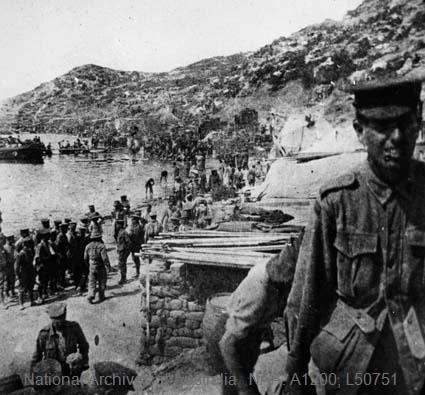
The 25th April 2025 marked 110 years since the start of the Gallipoli campaign of the First World War.
On 25 April 1915, around 16,000 men from the Australian and New Zealand Army Corps (ANZAC) conducted an amphibious landing on Gaba Tepe (Anzac Cove). ANZAC forces ultimately withdrew/were evacuated from Gallipoli by 20 December 1915. The campaign was ‘the first major amphibious operation in modern warfare’ however it failed to achieve its objectives and had disastrous costs for all sides.
Anzac Day, is one of Australia’s most important national occasions.
Link: Department of Veterans Affairs (DVA) – ANZAC Portal: Gallipoli Landing
Source: Military anniversaries 2025: a quick guide - Author: Melissa George – Accessed 21 October 2025
Link: Parliament of Australia – Military Anniversaries 2025: Military Anniversaries 2025
End of the Second World War (1939–45)
2025 marks 80 years since the end of the second world war.
This includes the anniversaries of the 8th May 45 - Victory in Europe Day (VE Day) and 15th August 1945 – Victory in the Pacific Day (VP Day) marking the surrender of Japan. It followed the atomic bombings of Hiroshima and Nagasaki in Japan on 6th and 9th August, respectively.
More than a million Australian military personnel served in the Second World War – 926,900 men and 66,100 women. Australians fought in campaigns against Germany and its allies in Europe, the Mediterranean and North Africa, and against Japan in Southeast Asia and the Pacific.
The names of 39,657 Australian service personnel are included on the Second World War Roll of Honour. Over 30,000 Australian service personnel became prisoners of war. Of the 8,000 Australians taken prisoner by the Germans and Italians, 265 died. In Southeast Asia, the Japanese held 22,376 Australians, including army nurses and civilians. Of those, 8,031 Australians died while in captivity.
Source: Military anniversaries 2025: a quick guide - Author: Melissa George – Accessed 21 October 2025
Link: Parliament of Australia – Military Anniversaries 2025: Military Anniversaries 2025
Korean War (1950–53)
The 25th June 2025 marks the 75th anniversary of Australia’s involvement in the Korean War.
The Korean War was a defining ‘Cold War’ moment that saw the world’s countries split between support for a democratic south and a communist north. The Democratic People’s Republic of Korea crossed the 38th parallel and captured Seoul in June 1950. At the request of the Republic of Korea (ROK), the United Nations Command (UNC) was established.
Australia was the second nation (after the US) to commit military forces to defend the ROK and would eventually become the fifth-largest contributor to UNC. Around 18,000 Australian soldiers, sailors, airmen and nurses served in Korea during the war and also during the initial post-armistice period of 1953–57.
An Armistice Agreement has been in place since July 1953, which is still enforced by United Nations Command.
Source: Military anniversaries 2025: a quick guide - Author: Melissa George – Accessed 21 October 2025
Link: Parliament of Australia – Military Anniversaries 2025: Military Anniversaries 2025
Further Information: Department of Veterans Afairs – Link: Korean War
Malayan Emergency (1948–60)
2025 marks 75 years since Australia’s involvement in the Malayan Emergency.
Australia’s involvement began in 1950 with the arrival of RAAF aircraft and personnel in Singapore. From 1954, there were 24 infantry battalions in Malaya from a wide variety of Commonwealth countries, including Australia and New Zealand.
Australia also provided artillery and engineering support, and an airfield construction squadron built the main runway for the air force base at Butterworth. The insurgency lost momentum in the wake of the Federation of Malaya’s independence, granted in August 1957 and, on 31 July 1960 the Emergency was declared to be over.
The campaign was one of the few effective counter-insurgency operations undertaken by the Western powers.
Source: Military anniversaries 2025: a quick guide - Author: Melissa George – Accessed 21 October 2025
Link: Parliament of Australia – Military Anniversaries 2025: Military Anniversaries 2025
Further Information: Department of Veterans Afairs – Link: Malayan Emergency
Vietnam War (1962-1975)
The first Australian troops committed to Vietnam arrived in Saigon on 3 August 1962. This group of 30 advisers was collectively known as the Australian Army Training Team Vietnam.
This commitment grew to involve the Australian Army, Navy and Air Force as well as civilian support such as medical/surgical aid teams, war correspondents and officially sponsored entertainers. By the time of the final withdrawal of the Australian Embassy Guard on 1 July 1973, approximately 60,000 Australian men and over 500 Australian women had served in the Vietnam War.
The Department of Veterans Affairs reviewed and subsequently extended the date range for Vietnam from 1972 (when Australian combat forces were withdrawn) to 1975 (when the war ended with the North Vietnamese capturing Saigon).
After the withdrawal of the 1st Australian Task Force from Phuoc Tuy Province in 1972 a few members of the Australian Army Training Team remained until 1973 and there was also a small army guard detachment in the Australian embassy until the very end.
Source: Australian War Memorial: ‘Vietnam 1962 – 1975’. Accessed 21 October 2025.
Link: Australian War Memorial: Vietnam, 1962 – 1975
Further Information: Department of Veterans Afairs – Link: Vietnam War
East Timor (1999-2013)
The International Force for East Timor (INTERFET) was a multinational peacekeeping taskforce, mandated by the United Nations to address the humanitarian and security crisis which took place in East Timor from 1999 - 2000 until the arrival of United Nations peacekeepers.
The International Force for East Timor was commanded by Major-General Peter Cosgrove of the Australian Army. The INTERFET coalition forces began deploying to East Timor on 20 September 1999 Five months later, on 28 February 2000, INTERFET handed over command of military operations to UNTAET (United Nations Transitional Administration in East Timor).
In May 2006, approximately 2000 ADF personnel deployed to Timor Leste (East Timor) in Operation Astute following unrest between elements of the Timor Leste Defence Force. Australia's military involvement in this conflict ended with the close of Operation Astute on 19 April 2013.
Source: Australian War Memorial: ‘East Timor, 1999-2013’. Accessed 21 October 2025.
Link: Australian War Memorial: East Timor, 1999 – 2013
Further information: Australian War Memorial: Commemoration – INTERFET
Further Information: Department of Veterans Afairs – Link:Timor - Leste